Treatment
What is dysphagia?
Dysphagia refers to difficulty swallowing, which can affect the ability to safely eat or drink. It may involve problems in the oral, pharyngeal, or esophageal phases of swallowing and can lead to complications such as aspiration, pneumonia, dehydration, or malnutrition. Dysphagia may occur in both adults and children due to neurological, structural, or developmental conditions.
What does treatment look like?
Adult Dysphagia
- Swallowing exercises to improve strength and coordination
- Diet modifications (texture, liquid consistency)
- Compensatory strategies (postures, pacing)
- Instrumental assessments (e.g., FEES, VFSS)
- Education on safe swallowing and oral care
Pediatric Feeding & Swallowing
- Feeding therapy focused on oral-motor skills and sensory needs
- Caregiver coaching for mealtime routines
- Support for picky eating and feeding aversion
What are voice disorders?
Voice disorders occur when there are changes in pitch, loudness, quality, or effort of the voice that affect communication. Individuals may experience a voice that sounds hoarse, strained, breathy, or weak, or may feel discomfort when speaking. Voice disorders can result from vocal misuse/overuse, neurological conditions (e.g., Parkinson’s disease), or structural changes to the vocal folds.
What does treatment look like?
Voice therapy focuses on improving voice quality, efficiency, and comfort, including:
- Exercises to improve breath support and vocal fold function
- Techniques to reduce strain and improve vocal efficiency
- Behavioral voice therapy (e.g., resonant voice therapy)
- Speech/voice programs for neurological conditions (e.g., Parkinson’s disease)
- Education on vocal hygiene and prevention
What are cognitive-communication disorders?
Cognitive-communication disorders involve difficulties with thinking skills that support communication, including attention, memory, problem-solving, organization, and word-finding. These changes can affect everyday tasks like following conversations, managing schedules, or expressing ideas clearly. They may occur after conditions such as stroke, traumatic brain injury, neurodegenerative disease, or chronic medical conditions (e.g., HIV).
What does treatment look like?
Treatment focuses on improving functional, real-world communication and cognitive skills, including:
- Memory and attention training
- Word-finding and discourse strategies
- Executive function (planning, organization, problem-solving)
- Use of compensatory strategies (e.g., calendars, apps, routines)
- Group-based therapy to support communication and social participation
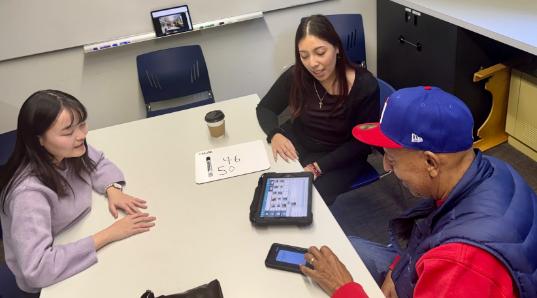
What is AAC?
AAC stands for Augmentative and Alternative Communication. It includes all the ways people communicate besides verbal speech. This can be as simple as gestures, facial expressions, or pointing to pictures, and as advanced as using a speech-generating devices (SGDs). AAC helps people of all ages share their thoughts, needs, and ideas by augmenting and supplementing verbal communication skills.
What We Do:
- AAC/Speech-Generating Device Evaluations
- Individualized AAC Therapy
- AAC Device Programming
- Family & Caregiver Training
Who We Serve:
- Children, adolescents, and adults who cannot use verbal speech alone to communication needs
- Families seeking AAC/SGD support
What We Offer:
- AAC Clinic Initiatives during the Fall & Spring Semesters: AAC/SGD Device Evaluations, AAC Progress Monitoring, Pediatric AAC Therapy, Aphasia AAC Therapy
- AAC Clinic Initiatives during the Summer A & Summer B: CommuniKitchen AAC Camp for Children, AAC ALS Clinic